The Cup Tie and the Long Road to a Winner
Cup tie format makes every round count. Follow a fictional tournament from its opening draw through byes, tied matches and the final that crowns a winner.
What does a cup tie format require before one club can be called the winner? It requires a route through pairings, decisions and rules: a team must advance at each stage until the bracket leaves one entrant standing.
A knockout bracket can look simple, but each line represents a match with consequences. To follow the whole journey, notice who enters each round, how a tied match is settled, and which result sends a team onward.
The elimination route
In single elimination, a losing team leaves the route to the title. A winner advances to another tie, then another, until one entrant remains. The bracket records not only the schedule but also which clubs can still reach the prize.
This structure makes a cup different from a league season. A league rewards results accumulated across fixtures; a cup makes each tie a gate. A team can play well and still be eliminated after a narrow defeat, while another can advance from a scrappy match.
Read the bracket one round at a time. After each result, ask which team advances and what rule determines the next pairing.
A worked cup route
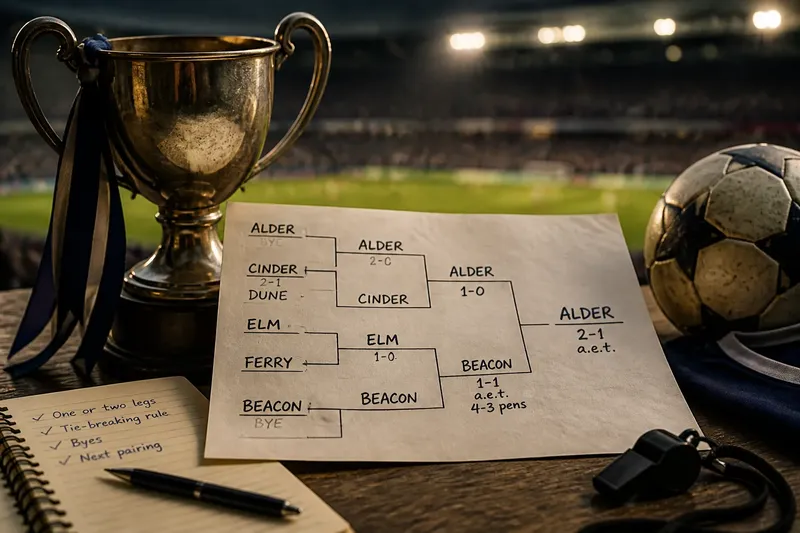
Imagine a fictional cup with six entrants: Alder, Beacon, Cinder, Dune, Elm, and Ferry. Its rules give two teams a first-round bye, then use single-match ties, with extra time and a shootout if a match remains level. This invented setup illustrates how a complete route can work; it does not describe a real tournament.
- Set the opening field. The six entrants cannot all be paired in one round. The organizer gives Alder and Beacon byes, while Cinder plays Dune and Elm plays Ferry.
- Record the first results. Suppose Cinder defeats Dune and Elm defeats Ferry. Cinder and Elm join Alder and Beacon in the semifinals; Dune and Ferry are eliminated.
- Follow the semifinal pairings. Suppose the draw pairs Alder with Elm and Beacon with Cinder. Alder wins its tie, while Beacon and Cinder are level after normal play. Under the invented rules, they play extra time; Beacon then wins the shootout and advances.
- Apply the final rule. Alder and Beacon meet in the final. Suppose Alder wins after extra time. Alder is the cup winner, Beacon finishes as runner-up, and the earlier results explain how each reached that last match.
The route shows what a bracket leaves implicit: a bye advances a team without a match, a tie-breaking rule completes a level contest, and each result determines the next pairing. If a real bracket does not show those details, consult the competition regulations rather than infer them.
Rules for tied matches
A tied score does not have one universal meaning in a knockout match. Depending on the competition, the teams may meet again in a replay, play extra time immediately, take a shootout, or follow another stated procedure.
A replay makes the first meeting only part of the decision; the return match completes the tie. Extra time extends the match on the day, while a shootout settles advancement through a separate sequence of attempts. These options shape how teams manage substitutions, energy and risk as a match reaches its decision point.
Check the stated tie-breaking rule before assuming that a draw means another fixture.
Byes and bracket balance
A bye lets an entrant advance without playing in a particular round. Organizers may use byes when the field does not divide neatly into pairs, or run preliminary ties to bring a larger field into the main bracket.
A bye is not a victory earned on the field, though it affects the route: a team entering later has fewer matches to play before a given round. Pairing rules also matter. An open draw, seeding, or restrictions on location or club eligibility can each shape which opponents are possible.
Distinguish an advance by bye from an advance earned by winning a tie.
Cup routes and league seasons
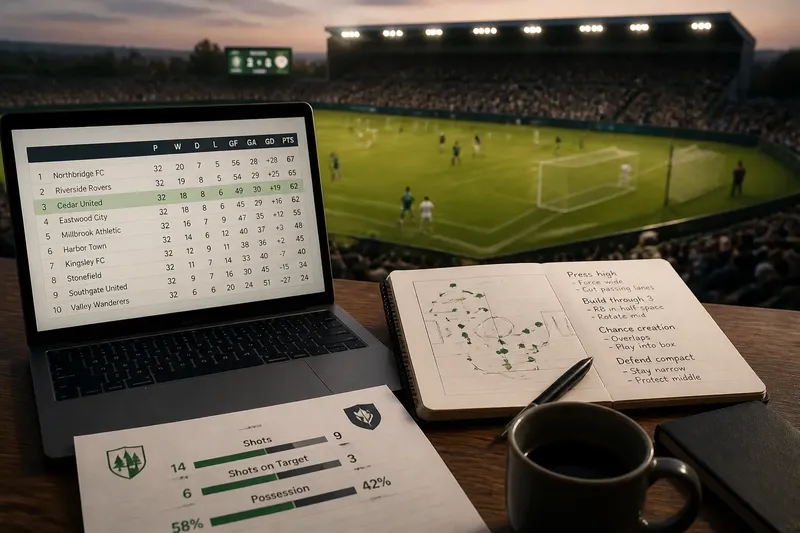
A league compares teams through repeated fixtures. Points and any stated tie-breakers establish the final order, so a result sits beside earlier and later matches. A cup asks a narrower question at each stage: which side advances from this tie?
The formats therefore offer different evidence about a team. League position reflects consistency across the schedule; cup progress depends on surviving each paired contest. Neither is a complete measure of quality, and a team can remain in a cup while having a modest league record—or be eliminated from a cup after a strong run of league results.
Say the fictional Harbor Vale loses its opening cup tie after controlling much of the match, then wins several league fixtures later. Its league season continues, but its cup route is closed. The contrast comes from the competitions’ structures, not from a different meaning assigned to the score.
Questions about cup ties?
What does “two-legged tie” mean?
A two-legged tie is decided across two matches, usually with each side hosting once. The aggregate score combines the goals from both legs, subject to the competition’s rules for resolving a level total.
Does a bye count as a win?
No. A bye advances an entrant without a match in that round, so it changes the bracket position rather than adding a result earned on the field.
What happens if a cup match is drawn?
The answer depends on the competition regulations: the teams might replay the tie, play extra time, take a shootout, or use another specified procedure. Check the rules for the particular round, since formats can differ between competitions.
Why can a lower-division club face a major opponent?
Some cups admit clubs from different levels, sometimes after qualifying rounds. A shared draw can produce a meeting that would not occur in a league restricted to a particular group of teams.
Reading the route
When watching a cup, track four details: whether the tie has one or two legs, how a level score is settled, whether either side entered through a bye, and what pairing awaits the winner. Those details explain why the same score can carry different consequences in different competitions.
- Observation: The bracket shows a team advancing without a listed match. If the regulations identify a bye, then record an advance without a win; otherwise check whether a preliminary result is missing.
- Observation: The tie is level at the end of normal time. If the rules call for extra time, then watch for the additional playing period; otherwise check whether a replay or shootout applies.
- Observation: The bracket pairs two teams across separate legs. If the tie is decided on aggregate, then follow the combined score; otherwise consult the rules for the deciding match.
- Observation: A team appears in a later round without a clear opponent. If the draw is incomplete, then wait for the pairing; otherwise check for a stated seeding or eligibility restriction.
- Observation: The winner’s next opponent is not shown. If the next draw has not taken place, then treat the path as unresolved; otherwise use the published bracket rather than assume a pairing.
- Observation: A shootout follows a level match. If the regulations make it the deciding procedure, then its outcome determines advancement; otherwise check the competition’s stated alternative.
The cup tie format is a route with exits, not a table of accumulated results. Follow the rules alongside the bracket, and each result will tell you not only who won the match but who remains able to win the cup.
Before kickoff, check the competition’s tie-breaking rule; it tells you what a level score will require and when the route to the next round is settled.